Mud Rotary Well Drilling: Process, Equipment and Rig Selection
Mud rotary drilling is a practical method for soil, clay, sand and many mixed formations. A reliable package needs the correct rig, rods, bit, mud pump, hoses, drilling fluid plan and borehole diameter, not only a machine price.
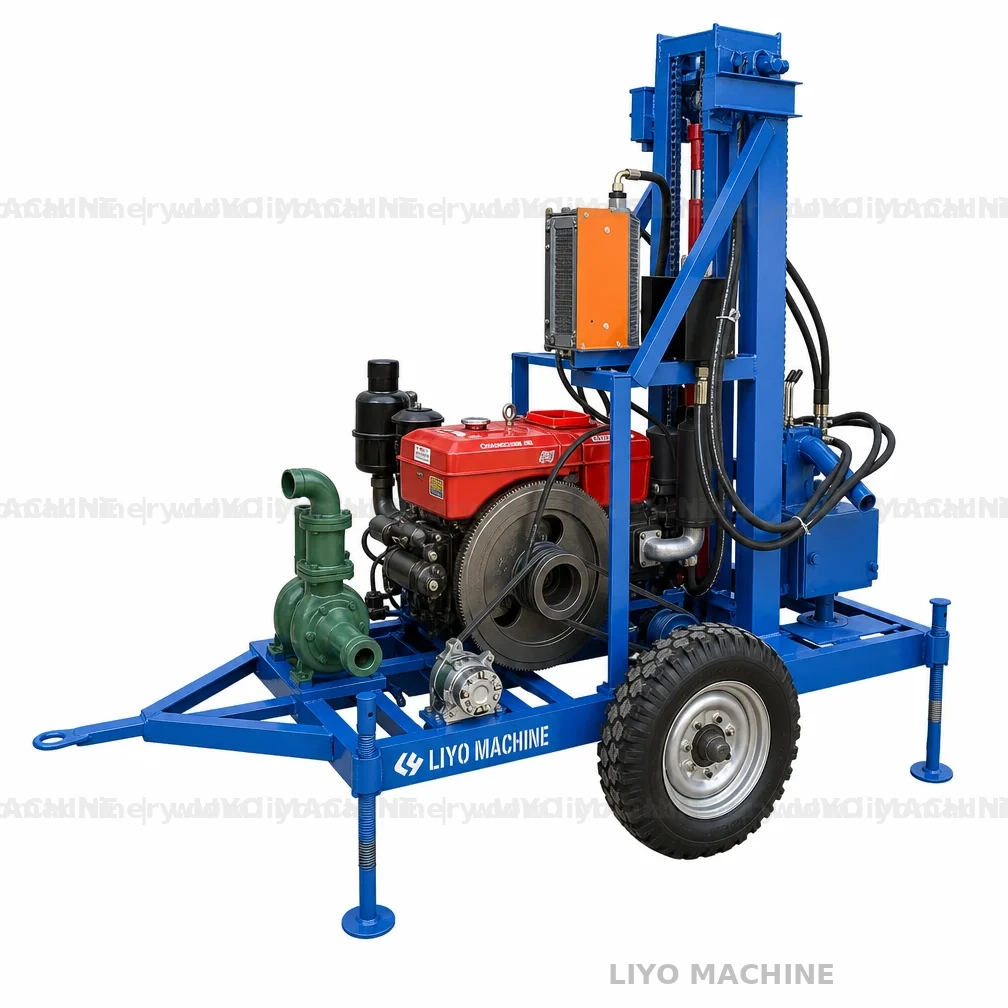
How Mud Rotary Well Drilling Works
The drill head rotates the drill string and bit while drilling fluid circulates through the borehole. The fluid carries cuttings upward, cools the bit and helps stabilize the hole wall in loose formations.
Rotation and Cutting
The rig turns the rods and formation-matched bit. Feed pressure should be controlled instead of forcing the bit.
Mud Circulation
A mud pump moves drilling fluid through the system so cuttings can return to the surface and settle in the mud pit.
Hole-Wall Support
Correct drilling fluid properties can reduce collapse risk in clay, sand and loose layers, but casing may still be required.
Borehole Cleaning
Circulation must continue long enough to remove cuttings before adding rods, changing tools or installing casing.
Mud Rotary Drilling Equipment List
| Equipment | Purpose | Selection Point |
|---|---|---|
| Water well drilling rig | Rotation, feed, pullback and rod handling | Depth, diameter, torque, lifting and mobility |
| Drill rods | Transfer torque and drilling fluid | Rod diameter, length, thread and total meters plus reserve |
| Soil, drag or tricone bits | Cut different formations | Required borehole diameter and actual geology |
| Mud pump | Circulate fluid and remove cuttings | Flow, pressure, hose size, depth and hole diameter |
| Hoses and swivel connections | Carry drilling fluid safely | Pressure rating, diameter, sealing and wear protection |
| Mud pit or tank | Settle cuttings and recirculate fluid | Available site space and required circulation volume |
| Casing and submersible pump | Complete the finished water well | Borehole diameter > casing OD; casing ID > pump OD |
Where Mud Rotary Drilling Is Suitable
Good Starting Conditions
Soil, clay, sand, weathered ground and many mixed layers are common applications when drilling fluid and bits are correctly selected.
Loose Sand and Unstable Ground
Mud can help support the hole wall, but casing design and local well-construction practice remain important.
Rock Layers
Some rock can be drilled with suitable tricone or rock tools, but continuous hard granite may require a matched DTH air system or heavier rig.
Large Diameter at Depth
Larger holes require more cutting energy and circulation capacity. Do not assume the maximum rated depth remains unchanged at maximum diameter.
Choose the Rig by Depth and Working Condition
| Project | Recommended Starting Point | Reason |
|---|---|---|
| 100-150m compact wells | LY-150 | Economical wheeled package for suitable soil and mixed-ground projects |
| Up to 200m contractor wells | LY-200 | More depth margin, 32HP diesel power and a 70-350mm model range |
| Soft, muddy or narrow sites | LYC-150M | Rubber crawler mobility where a wheel rig and towing vehicle may struggle |
| Deeper and higher-torque projects | LYQY-260 | Dual hydraulic motors, 64mm rods and stronger contractor configuration |
If the project is mainly hard rock, compare the mud package with a matched DTH system. Read Mud Pump vs DTH Air Compressor Drilling.
LIYO Models to Compare
Final configuration depends on depth, diameter, geology, drilling method and site access.
Continue the Equipment Selection Process
Questions From Drilling Equipment Buyers
Does mud rotary drilling need an air compressor?
No. Standard mud rotary drilling uses a mud pump and drilling fluid. An air compressor is required for DTH air drilling, not for the normal mud-circulation package.
Is mud rotary drilling suitable for hard rock?
It can handle some rock with suitable tools, but continuous hard granite is often better evaluated for DTH drilling or a heavier machine.
How do I select mud pump size?
Pump flow and pressure should be matched to borehole diameter, depth, rod passage, drilling fluid and expected cuttings. Send the complete project data before ordering.
Can one bit drill every formation?
No. Soil, clay, gravel and rock require different cutting structures. The bit type and diameter should be selected after geology is understood.
Need a Project-Based Rig Recommendation?
Send the target depth, borehole diameter, casing or pump size, ground condition, drilling method and project location. LIYO will recommend a practical machine and tooling package.