Fractured Granite Water Well Drilling Method and Equipment
Plan fractured-granite water well drilling with overburden casing, tricone or DTH tools, compressor matching and responsible LIYO equipment guidance.
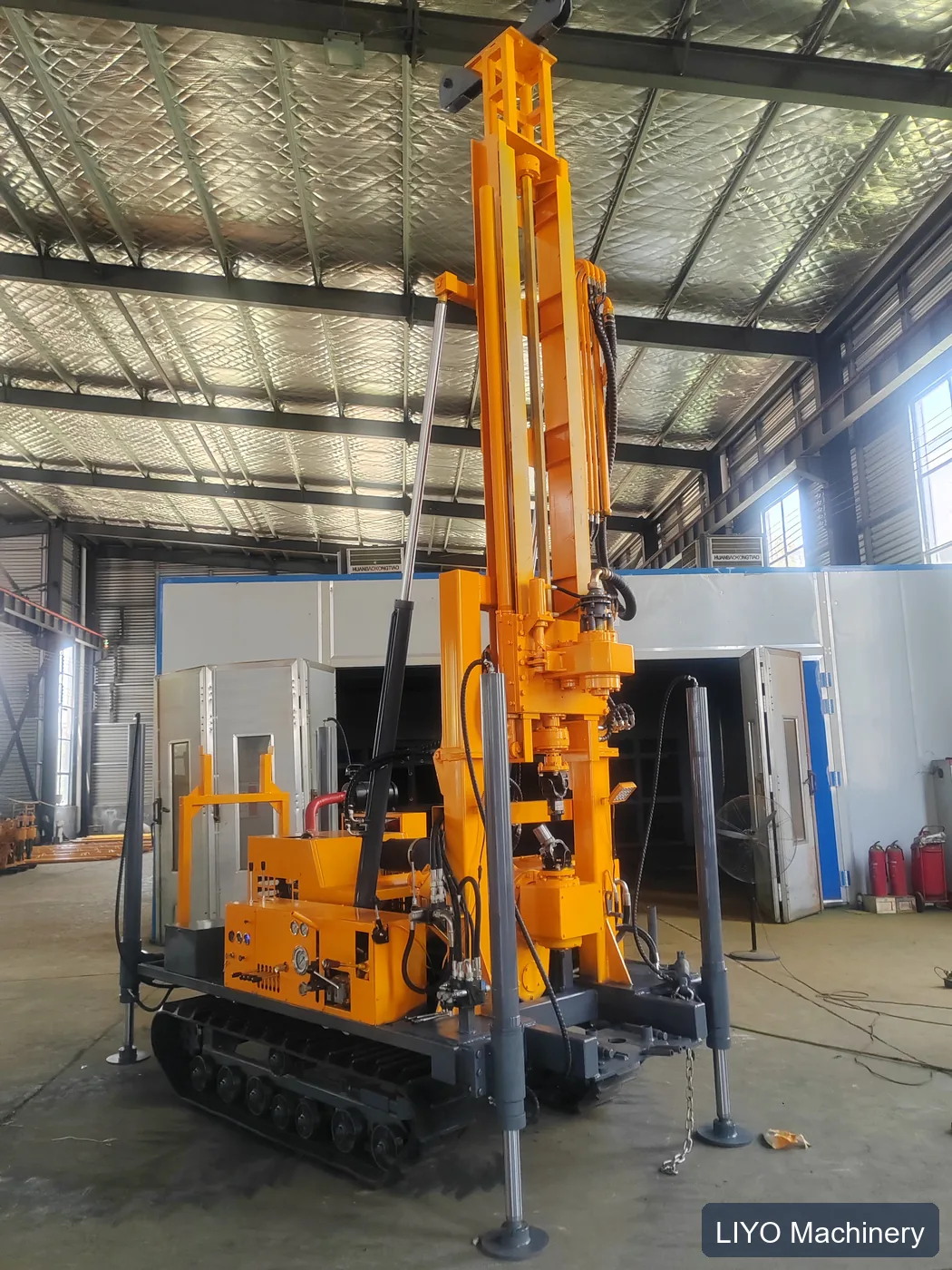
Understand the Ground Before Choosing the Machine
Fractured granite contains strong rock blocks separated by joints, weathered seams and possible water-bearing fractures. It is not equivalent to continuous fresh granite, but the drill still experiences impact, abrasion and sudden loss zones.
Main Drilling Risks
Risks include tool shock, deviation along fractures, lost circulation, falling blocks and a transition from soft weathered material to very hard fresh rock. Broken fragments can wedge above a hammer or bit.
Recommended Starting Method
Stabilize and case loose overburden first. Mud rotary with robust rock tools may handle weathered and medium-hard sections. A matched DTH system can be evaluated when competent granite becomes dominant and suitable compressor pressure and air volume are available.
Match the Bit and Cleaning System to the Formation
Drill-Bit Selection
Tricone can negotiate variable contact; DTH is effective in competent hard rock when correctly sized; PDC may suffer impact in heavily fractured granite. Tool choice must follow fracture spacing, hardness, diameter and machine capacity.
Mud or Air Cleaning
Mud losses can identify open fractures but may prevent cleaning. Air returns must also have a clear annulus. Before DTH work, confirm compressor model, working pressure, air volume, hose, lubricator, hammer and bit as one system.
Casing, Screen and Pump Planning
Case broken upper intervals and protect productive fractures from collapse or surface contamination. Do not run an oversized pump through casing with inadequate clearance; preserve the borehole-casing-pump hierarchy.
Practical Construction Sequence
Use this sequence as a planning checklist. The operator must still adjust feed, speed, fluid or air and casing to actual returns and local well-construction requirements.
Step 1
Separate overburden, weathered granite, fractured granite and fresh granite in the plan.
Step 2
Case the loose upper hole before changing to hard-rock tools.
Step 3
Inspect fracture returns and reduce feed during severe impact.
Step 4
Match the complete compressor and DTH tool chain before air drilling.
Step 5
Clean broken fragments thoroughly and confirm the productive interval before completion.
What Changes With Geology?
| Decision | What to Check | Why It Matters |
|---|---|---|
| Depth and diameter | Finished depth, bit diameter, casing OD and pump OD | Larger holes require more torque, cleaning capacity and practical depth margin |
| Formation | Layer sequence, hardness, fractures, abrasiveness and stability | Determines drilling method, bit, casing and expected penetration |
| Cuttings removal | Mud-pump flow and pits, or compressor pressure and air volume | Cuttings left in the annulus cause sticking, wear and false depth limits |
| Rig capacity | Machine mass, torque, feed, pullback, rods and mast | A catalog depth cannot compensate for an under-sized working system |
| Operator control | Logs, returns, penetration, torque and cleaning cycles | Early formation recognition prevents tool damage and borehole loss |
Responsible Compact-Rig Limitation
A small portable rig cannot be guaranteed to drill continuous hard granite to maximum rated depth. Fractured zones may be manageable, but fresh granite thickness, hole diameter and tool system determine the real limit.
LIYO compact rigs are built mainly for portability, easy operation and lower investment. A responsible recommendation uses real geology and borehole dimensions instead of promising maximum rated depth in every rock.
LIYO Models to Compare
Final configuration depends on depth, diameter, geology, drilling method, terrain and transport.
Continue the Drilling Selection Process
Questions From Water Well Drilling Buyers
What information is needed before selecting the rig?
Provide the application, target depth, required borehole diameter, casing and pump size, geological layers, terrain, drilling method and whether an air compressor is already available.
Which drilling method is recommended for this formation?
Stabilize and case loose overburden first. Mud rotary with robust rock tools may handle weathered and medium-hard sections. A matched DTH system can be evaluated when competent granite becomes dominant and suitable compressor pressure and air volume are available.
Which drill bit should be used?
Tricone can negotiate variable contact; DTH is effective in competent hard rock when correctly sized; PDC may suffer impact in heavily fractured granite. Tool choice must follow fracture spacing, hardness, diameter and machine capacity.
Can a compact rig guarantee maximum rated depth?
No. A small portable rig cannot be guaranteed to drill continuous hard granite to maximum rated depth. Fractured zones may be manageable, but fresh granite thickness, hole diameter and tool system determine the real limit.
How should the finished well diameter be planned?
Use the rule: borehole diameter must exceed casing outside diameter, and casing inside diameter must exceed submersible pump outside diameter. Also allow space for gravel pack and installation tolerance where required.
Is Fractured Granite Water Well Drilling Method and Equipment the only geology expected in the hole?
Do not assume so. Ask for nearby well logs and monitor returns, torque and penetration because several layers commonly occur in one borehole.
Send LIYO Your Real Geological Conditions
Tell us the application, depth, borehole diameter, casing and pump size, terrain, soil or rock layers, destination and compressor specifications if available.