How to Choose a Water Well Drilling Rig for 50-100m Wells
Many first-time buyers only know that they need water. They may not know the final drilling depth, borehole diameter or whether electricity is available at the site. This guide explains how to select a practical rig for household wells, farm irrigation and small contractor work between 50m and 100m.
Make the Technical Decision Before Comparing Prices
A correct configuration starts with the working conditions, not the lowest public price.
| Question to Answer | Why It Changes the Machine | Practical Starting Point |
|---|---|---|
| Required depth | It decides mast, drill rod quantity and power reserve. | State the expected depth and keep a reasonable reserve. |
| Borehole diameter | A larger hole needs more torque and suitable drill bits. | For many water wells, 5 or 6 inches is common. |
| Ground condition | Sand, clay, gravel and rock need different drilling methods. | Tell the supplier whether rock is expected. |
| Power at site | Electric rigs need stable 220V or 380V supply; remote sites usually need diesel. | Confirm electricity before comparing electric and diesel prices. |
| Use and mobility | A farm owner and a drilling contractor need different transfer capability. | Choose wheel or crawler based on access conditions. |
Start With the Well, Not the Platform Price
A low platform price rarely represents a complete drilling solution. A usable configuration normally includes the machine, the correct length of drill rods, suitable bits, packaging and the delivery method. Begin by confirming the working depth, diameter and ground condition.
Choose the Borehole Diameter Around the Pump and Casing
For many domestic and agricultural water wells, contractors drill a 5-inch or 6-inch borehole, install 110mm or 140mm PVC casing, and then fit a submersible pump. The planned pump size and casing size should be checked before the drill bit is selected.
Electric or Diesel: Make the Decision Early
An electric rig can be economical when stable site power is available. If the well is on a farm, in a rural area or at a new construction site without reliable 220V or 380V power, a diesel rig is normally the safer operating choice.
Do Not Ignore Drill Rod Quality
Drill rods carry torque through the entire borehole. LIYO uses high-strength 51mm drill rods with friction-welded joints. For deep or repeated work, rod strength matters as much as the rig itself because weak rods can bend, wear or fail underground.
Choose Mobility for the Actual Jobsite
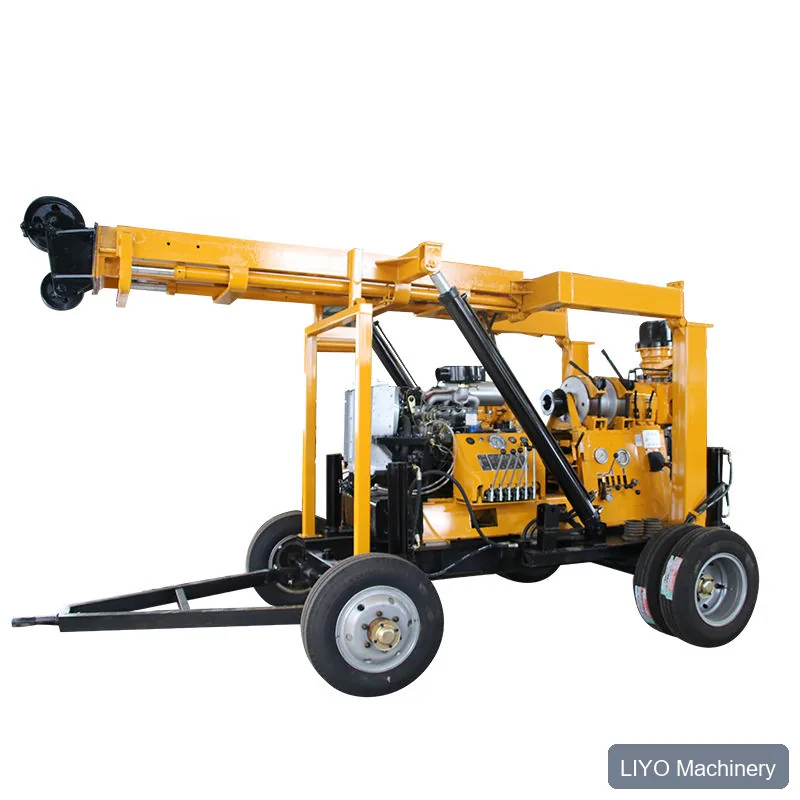
Wheel-mounted rigs are practical where a pickup, tractor or trailer can tow equipment to the site. Crawler rigs provide better traction on soft, muddy or uneven ground, but their packing volume and freight cost are usually higher.
Explore LIYO Water Well Drilling Rigs
Continue Your Research
Frequently Asked Questions
What drilling rig is suitable for a 50m farm well?
The suitable rig depends on borehole diameter, soil condition and power at the site. A compact electric model can work where stable power is available, while a diesel wheel-mounted rig is more suitable for remote farm locations.
Is a 5-inch or 6-inch hole common for a water well?
Yes. These sizes are commonly used because they can accommodate standard casing and a submersible pump. The exact size should match the pump and casing plan.
Can an electric drilling rig work without site power?
No. If there is no stable 220V or 380V supply, a diesel-powered drilling rig is normally the appropriate choice.
Why are 51mm drill rods important?
High-strength 51mm rods with friction-welded joints offer better torque transmission and durability than low-cost light-duty alternatives.
Need a Water Well Drilling Recommendation?
Send LIYO your drilling depth, hole diameter, soil or rock condition, available power and destination. We will help you choose a practical configuration.